



Function
Mayari Birko-Flor Metallic Black City Comfort: Guia de Adaptação e Ajuste das Tiras na Primeira Semana | BIRKENSTOCK Oficial
Walking as nature intended, from the first mile
The Mayari Birko-Flor Metallic Black City Comfort arrives with a cork-latex footbed that is ready to learn your stride. In the first week, you are not simply wearing a sandal; you are training a natural walking surface. The footbed begins firm, almost unyielding, because it is built from cork and latex harvested and pressed in Germany. That firmness is intentional. It asks your feet to do the work they were designed to do: spread, grip, and roll. By day seven, the cork will have started to darken slightly under the heel and ball of the foot, a quiet record of your gait.
This guide is for the person who wants to understand that process, not rush it. The Mayari is a two-strap sandal with a toe loop, and its Birko-Flor upper in Metallic Black or Copper has a smooth, leather-like finish that wipes clean with a damp cloth. But the real story is underfoot. Whether you choose Metallic Black or Copper, the footbed is the same: a contoured cradle that supports the arch, cups the heel, and leaves the toes free to splay. That is walking as nature intended, and it starts with a break-in period measured in days, not months.
Day one: the footbed feels hard, and that is correct
Your first step into the Mayari will feel different from a foam slide or a cushioned sneaker. The cork-latex footbed does not compress like soft plastic. Instead, it responds to heat and pressure over time. On day one, the arch support may feel pronounced, even assertive. The heel cup may seem deep. This is the footbed holding its shape, waiting for yours. Wear them for twenty minutes indoors. Walk on a hard floor, not carpet, so you can feel the footbed's contours against your sole. Notice where your heel lands and where your toes rest. The Mayari's toe loop keeps the foot from sliding forward, which means the arch support stays under your arch, not under your toes.
If you have never worn a cork-latex footbed before, this first week is a conversation. The cork is not broken in by force; it is broken in by repetition. Short, frequent wears are better than one long wear. Twenty minutes in the morning, twenty in the afternoon. By the end of day one, the footbed will still be firm, but your foot will have begun to map its own territory.
Days two through four: strap fit and the two-buckle adjustment
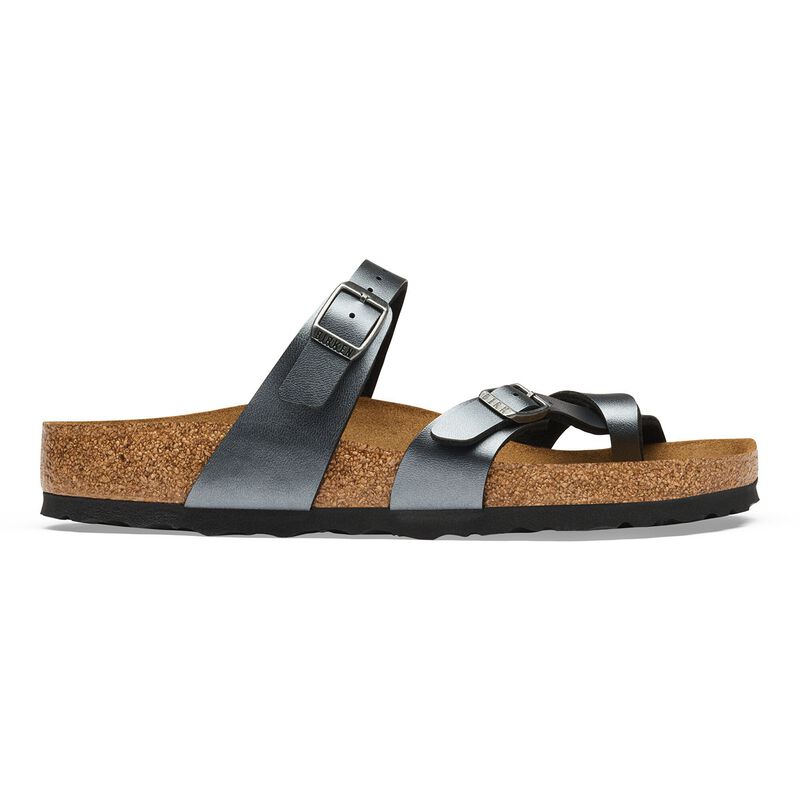
The Mayari has two adjustable straps, each with a metal buckle. The upper strap crosses the instep; the lower strap holds the toe loop and forefoot. Birko-Flor is a durable synthetic that does not stretch much, so the fit you set on day one is close to the fit you will have on day thirty. That is a good thing. It means you can dial in the straps once and trust them. The goal is snug but not tight. You should be able to slide one finger under each strap. If the strap leaves a red mark that lingers after you remove the sandal, it is too tight. If your foot slides side to side when you walk, it is too loose.
During days two through four, pay attention to the toe loop. It should sit comfortably between your first and second toes without pulling. If it pulls, loosen the lower strap by one notch. The Mayari's toe loop is not a decoration; it anchors the foot so the heel stays in the heel cup. When the toe loop is correctly adjusted, you will feel the footbed's arch support rise to meet your arch with every step. That is the cork-latex footbed beginning to respond to your weight and warmth.
Days five through seven: walking on hard floors
Hard floors are the best teacher for a cork-latex footbed. Concrete, tile, and wood do not absorb impact the way carpet does, so your feet receive clear feedback. The Mayari's footbed is designed to distribute that impact across the whole foot, not just the heel. As you walk on hard floors during the first week, you may notice the footbed feeling slightly more forgiving under the ball of the foot and heel. That is the cork and latex beginning to mold. The change is subtle, but it is real. By day seven, the footbed will have a faint impression of your heel and toes.
This is also the week when the Mayari starts to feel like your sandal, not just a sandal. The Birko-Flor upper, whether in Metallic Black or Copper, will have softened slightly at the edges. The buckles will have settled into their notches. And the cork-latex footbed will have begun its long, slow adaptation to your stride. Walking on hard floors is not a test; it is a practice. The more you walk, the more the footbed learns.
Width, fit, and the Mayari's place in the BIRKENSTOCK line
BIRKENSTOCK offers the Mayari in two widths: narrow and regular. The width affects the fit across the metatarsal heads, not the length. If you have a wide forefoot, choose regular. If you have a narrow foot, choose narrow. The Mayari's two-strap design is more forgiving than a single-strap sandal because you can adjust both the instep and the forefoot independently. That said, the toe loop is not adjustable, so the width should be correct from the start. The cork-latex footbed will mold to your foot's length and arch, but it will not widen the upper.
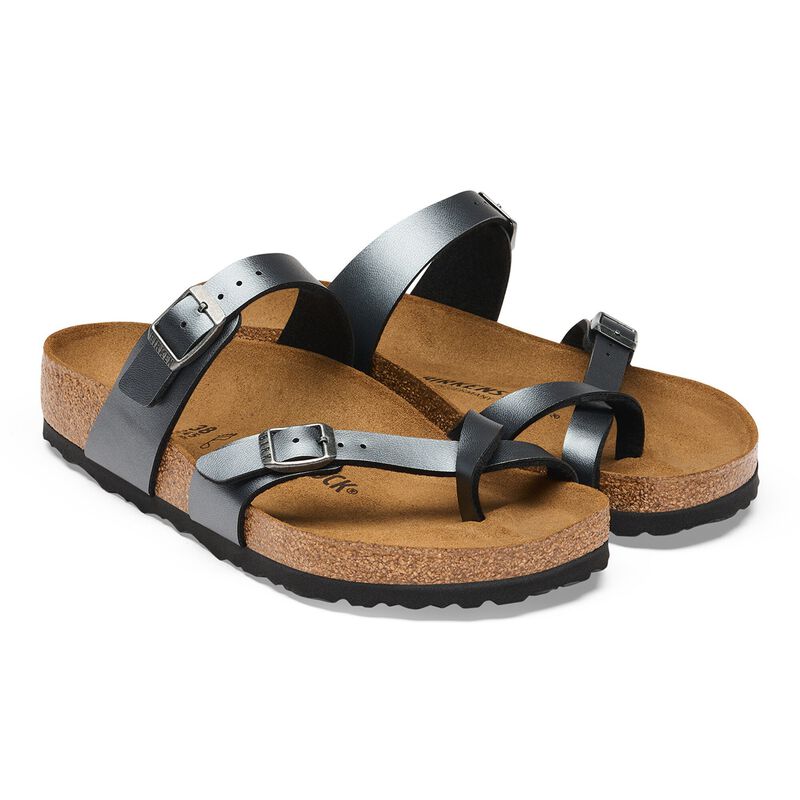
Compared to the Arizona, which has two wide straps and no toe loop, the Mayari offers a more secure fit for those who want their foot to stay put. Compared to the Madrid, a single-strap slide, the Mayari provides more adjustability and a more locked-in feel. The Boston, a closed-toe clog, is a different category altogether. The Mayari sits in the middle: open, airy, but with enough structure for daily wear on hard floors. The Birko-Flor upper in Metallic Black or Copper gives it a polished look that works with jeans or trousers, but the footbed is pure BIRKENSTOCK: cork, latex, and jute, assembled in Germany.
Break-in, not break down
A cork-latex footbed does not break down the way foam does. It breaks in. The difference matters. Foam compresses and loses its support. Cork and latex mold and keep their resilience. The Mayari's footbed will eventually take on the shape of your foot, but it will not collapse. That is why a well-kept BIRKENSTOCK can last for years. During the first week, you are not wearing out the footbed; you are introducing it to your foot. The process is gradual, and it rewards patience. If you wear the Mayari for an hour on day one and two hours on day two, you are doing it right. If you wear them for eight hours on day one, you may feel soreness in your arches. That soreness is not a defect; it is your foot waking up to a new kind of support.
Caring for Birko-Flor and the cork footbed
Birko-Flor is easy to care for. Wipe it with a damp cloth and mild soap. Do not machine wash or submerge the sandal. The cork-latex footbed should be kept dry. If it gets wet, let it air dry away from direct heat. Do not put it in a dryer or leave it in a hot car. The Metallic Black and Copper finishes are surface treatments on the Birko-Flor, so avoid abrasive cleaners that could dull the sheen. With basic care, the upper will look presentable for years, and the footbed will develop a patina that is unique to you.
The first week is a beginning
By the end of the first week, the Mayari Birko-Flor Metallic Black City Comfort will feel less like a new purchase and more like a familiar tool. The cork-latex footbed will have started to respond to your weight and gait. The straps will have settled into their buckles. The toe loop will have become a natural anchor. And you will have walked on hard floors enough to feel the footbed's contours working with your foot, not against it. This is not a sandal that asks you to change your stride overnight. It asks you to walk, day after day, as nature intended. The rest is cork, latex, and time.
View this BIRKENSTOCK style in the shop
People also search
BIRKENSTOCK oiled leather clog care rain and commute
BIRKENSTOCK Arizona two strap sandal fit true to size
best color for BIRKENSTOCK Mayari Birko-Flor Metallic Black City Comfort everyday wear
BIRKENSTOCK Boston shearling vs regular Boston
BIRKENSTOCK Arizona vegan Birko-Flor vs leather
BIRKENSTOCK kids vs adult sizing for small feet
do BIRKENSTOCK sandals run small or large
BIRKENSTOCK sandals waterproof options EVA
BIRKENSTOCK Arizona vs Boston which is better for walking
how often to replace BIRKENSTOCK cork footbed
BIRKENSTOCK Arizona two strap too loose how to tighten
BIRKENSTOCK Gizeh regular vs platform
BIRKENSTOCK Arizona oiled leather darkens over time
BIRKENSTOCK cork footbed squeak how to fix
how to stretch tight BIRKENSTOCK sandals at home
BIRKENSTOCK Arizona mink vs tobacco oiled leather
BIRKENSTOCK sizing guide regular vs wide width
BIRKENSTOCK Boston for office casual dress code
BIRKENSTOCK Arizona white vs black everyday wear
BIRKENSTOCK Arizona white Birko-Flor scuff care
best BIRKENSTOCK clog for indoor and outdoor
BIRKENSTOCK Mayari toe loop vs Gizeh fit
BIRKENSTOCK sandals for sightseeing Europe cobblestones
BIRKENSTOCK Boston fit compared to Arizona
BIRKENSTOCK Arizona outfit with linen summer clothes
how to clean BIRKENSTOCK Birko-Flor without damage
BIRKENSTOCK Kyoto vs Boston clog comparison
how to choose BIRKENSTOCK width letter R or N
BIRKENSTOCK sandals lightweight hiking light trails
BIRKENSTOCK Boston break in time first week
Trending BIRKENSTOCK searches
BIRKENSTOCK Madrid sandal
summer BIRKENSTOCK outfits
BIRKENSTOCK wide width
BIRKENSTOCK white Arizona
BIRKENSTOCK travel sandals
Arizona vs Madrid
regular vs wide BIRKENSTOCK
BIRKENSTOCK original footbed
BIRKENSTOCK mink oiled leather
BIRKENSTOCK cobblestone walking
oiled leather clog care
BIRKENSTOCK Birko-Flor
Mayari Birko-Flor Metallic Black City Comfort Birko-Flor
break-in cork footbed
BIRKENSTOCK oiled leather
BIRKENSTOCK 2026 trends
BIRKENSTOCK cork footbed
Mayari Birko-Flor Metallic Black City Comfort cork footbed
cork footbed care
BIRKENSTOCK platform Arizona
