



Function
Arizona Leder White City Comfort: Guia de adaptação e ajuste das tiras na primeira semana | BIRKENSTOCK Oficial
Why the First Week Matters
The Arizona Leder White City Comfort arrives with a cork-latex footbed that is firm and responsive, not soft and pillowy. That firmness is intentional. The footbed is designed to support your arch, cup your heel, and encourage a natural walking motion. During the first week, the cork and latex begin to adapt to the unique shape of your feet. You may feel a slight stiffness under the arch or along the edges. This is normal. The footbed is not broken in until it has spent several hours on your feet, preferably on hard floors, where the cork can compress and rebound with each step.
Unlike a foam sandal that immediately feels soft, the Arizona Leder White City Comfort asks for a short adjustment period. Think of it as a partnership: you provide the weight and motion, the cork-latex provides the structure, and together you create a footprint that no other shoe can replicate. The leather upper, available in White or Black, also softens with wear, gradually conforming to the top of your foot without losing its shape.
Day One: Short Walks, Hard Floors
Start by wearing your Arizona Leder White City Comfort indoors for 20 to 30 minutes. Hard floors—wood, tile, or concrete—are ideal because they give the footbed a solid surface to press against. Carpet tends to absorb pressure and slows the molding process. On the first day, keep the straps slightly loose. The goal is to let your foot settle into the footbed without fighting the leather. If you feel pressure points on the top of your foot, loosen the buckle by one hole. The two-strap design allows independent adjustment, so you can fine-tune the fit across the instep and the toes.
After your first short walk, take the sandals off and inspect your feet. Any redness should fade within a few minutes. If a specific spot remains tender, note where it is and adjust the strap accordingly. The cork-latex footbed will begin to show a faint impression of your heel and toes after the first few wears. That impression is the beginning of your personal footbed.
Day Two and Three: Extending the Time
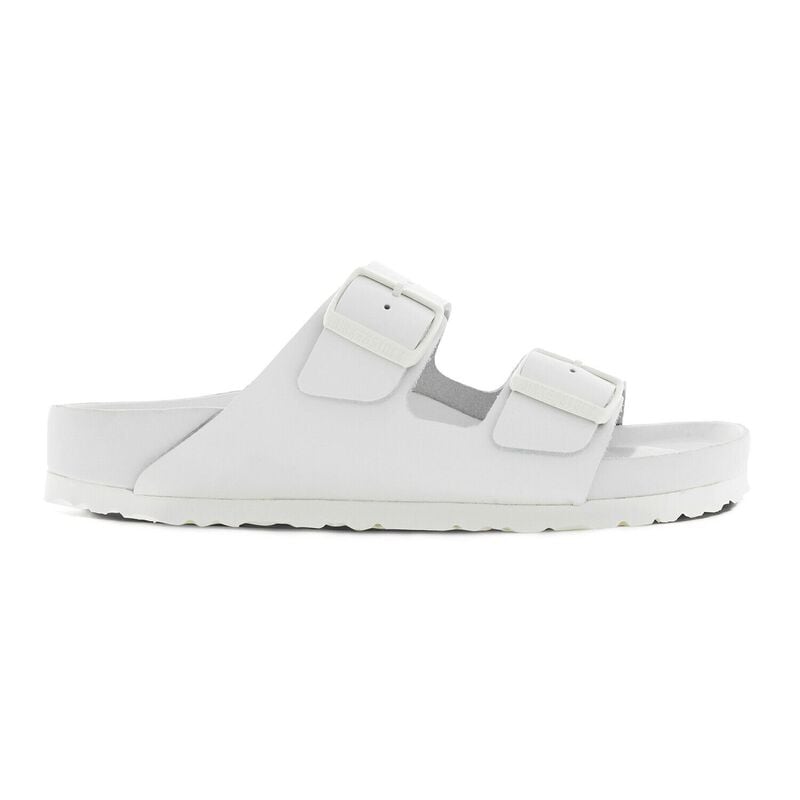
On the second and third days, increase your wear time to 45 minutes to an hour. Continue to walk on hard floors. The cork-latex footbed will start to feel less rigid under the arch and more supportive. You may notice that the heel cup feels more secure, as if it is gently holding your heel in place. That is the latex working with the cork to create a custom cradle. Keep the straps snug enough that your foot does not slide, but not so tight that the leather digs in. The White or Black leather will begin to soften at the flex points, especially where the straps meet the footbed.
If you normally wear socks, try the sandals barefoot for these first sessions. Bare skin transfers heat and moisture to the leather and cork, which speeds up the molding process. If you prefer socks, choose thin ones to avoid adding bulk that could stretch the straps unevenly.
Day Four to Seven: Longer Walks and Real-World Surfaces
By the fourth day, you can extend your walks to 1–2 hours. The Arizona Leder White City Comfort should now feel noticeably more comfortable. The footbed will have taken on the shape of your arch and heel, and the leather will have relaxed across the instep. This is the point where many people notice the difference between a cork-latex footbed and a standard foam sole: the support remains consistent, while the surface becomes more forgiving. Continue to walk on hard floors when possible, but you can also introduce gentle outdoor surfaces like pavement or packed gravel. Avoid uneven trails until the footbed has fully adapted.
During this phase, check the straps again. Leather can stretch slightly with wear, so you may need to tighten the buckle by one hole. The goal is a secure but comfortable fit. Your foot should not slide forward when you walk, and your toes should not grip the front edge. If you feel your foot moving, adjust the front strap first, then the back strap. The two straps work together to hold the midfoot and forefoot.
Strap Fit: The Key to Comfort
The Arizona Leder White City Comfort uses two adjustable leather straps, each with a metal buckle. Proper strap fit is essential for both comfort and foot health. The front strap should cross the instep at a slight angle, sitting just behind the ball of your foot. It should be snug enough to keep your foot from sliding forward, but loose enough that you can slide a finger underneath. The back strap sits closer to your ankle and should hold your heel in place without pressing on the Achilles tendon.

If you have a high instep, start with the straps on the loosest setting. If you have a narrow foot, you may need to tighten them more than expected. The leather will stretch slightly over time, so it is better to start slightly snug than too loose. Remember that the footbed itself will also change shape, which can affect how the straps feel. Recheck the fit after the first week and adjust as needed.
Walking on Hard Floors: What to Expect
Hard floors are the best environment for breaking in a cork-latex footbed because they provide immediate feedback. On a hard surface, your foot presses directly into the cork, which compresses and then rebounds. This action helps the footbed mold to your arch and heel. On soft carpet, the footbed does not receive the same pressure, so the break-in takes longer. If you work from home or spend most of your day on hard floors, the Arizona Leder White City Comfort is an excellent choice. The footbed will gradually become a mirror of your foot, and the leather will soften without losing its structure.
When walking on hard floors, pay attention to your gait. The footbed is designed to encourage a natural roll from heel to toe. You should feel your heel land in the heel cup, your arch supported, and your toes able to spread naturally. Avoid shuffling or gripping with your toes. If you feel yourself doing this, loosen the front strap slightly. The sandal should feel like an extension of your foot, not a constraint.
Leather Care for White and Black
The Arizona Leder White City Comfort is made from smooth leather, which is durable but requires occasional care. For the White color, use a soft brush or damp cloth to remove dust and dirt. Avoid harsh chemicals that could discolor the leather. For the Black color, a slightly damp cloth is usually enough. If the leather becomes dry, apply a small amount of colorless leather conditioner. Do not saturate the leather, as this can weaken the bond with the footbed. Allow the sandals to air dry away from direct heat. With proper care, the leather will develop a subtle patina that adds character.
When to Know the Break-In Is Complete
The break-in period for the Arizona Leder White City Comfort typically lasts one to two weeks, depending on how often you wear them. You will know the footbed is broken in when you can slide your foot in and feel immediate comfort, with no pressure points and no need to adjust the straps. The cork-latex will have darkened slightly in the areas of highest pressure, and the leather will have softened at the flex points. At that stage, the sandal is ready for longer walks, travel, and everyday wear. The White and Black colorways are versatile enough for city streets, casual offices, and weekend errands.
Remember that the footbed is the heart of the sandal. It is made from cork and latex, a combination that provides support, shock absorption, and breathability. Unlike synthetic soles, cork-latex does not flatten out permanently. It responds to your weight and movement, which is why the first week is so important. Give it time, and the Arizona Leder White City Comfort will reward you with a fit that is uniquely yours.
View this BIRKENSTOCK style in the shop
People also search
BIRKENSTOCK Arizona midnight vs black oiled leather
BIRKENSTOCK sandals for nurses and long shifts
BIRKENSTOCK footbed sandals break-in no blisters
BIRKENSTOCK Arizona two strap too loose how to tighten
BIRKENSTOCK Milano ankle strap vs Arizona stability
BIRKENSTOCK footbed sandals for standing on hard floors
best color BIRKENSTOCK Arizona for everyday
BIRKENSTOCK Boston break in time first week
BIRKENSTOCK footbed technology cork and latex
BIRKENSTOCK Birko-Flor vs leather which lasts longer
BIRKENSTOCK Arizona for men first pair guide
do BIRKENSTOCK sandals work without socks
are BIRKENSTOCK good for standing cooking at home
BIRKENSTOCK sandals for plantar comfort walking
BIRKENSTOCK Boston fit compared to Arizona
BIRKENSTOCK Arizona metallic vs classic leather
BIRKENSTOCK sandals for sightseeing Europe cobblestones
best BIRKENSTOCK for backyard home and errands
BIRKENSTOCK wide width sandals for high volume feet
BIRKENSTOCK Boston clog with socks in cold weather
BIRKENSTOCK Arizona for summer walking all day
BIRKENSTOCK Arizona two strap sandal fit true to size
BIRKENSTOCK Gizeh thong sandal vs Arizona two strap
are BIRKENSTOCK cork footbed sandals good for all-day walking
BIRKENSTOCK Arizona Big Buckle vs classic Arizona
BIRKENSTOCK Boston shearling vs regular Boston
do BIRKENSTOCK sandals run small or large
how to choose BIRKENSTOCK width letter R or N
BIRKENSTOCK oiled leather clog care rain and commute
best BIRKENSTOCK for city walking tour
Trending BIRKENSTOCK searches
BIRKENSTOCK wide width
BIRKENSTOCK Big Buckle
Arizona vs Boston
BIRKENSTOCK Birko-Flor
BIRKENSTOCK vegan Birko-Flor
BIRKENSTOCK sizing
BIRKENSTOCK Milano
BIRKENSTOCK Arizona
BIRKENSTOCK Gizeh
BIRKENSTOCK platform Arizona
BIRKENSTOCK tobacco leather
ankle strap Milano
BIRKENSTOCK black Arizona
BIRKENSTOCK 2026 trends
Arizona Leder White City Comfort cork footbed
summer BIRKENSTOCK outfits
two strap sandal
Boston vs Kyoto
Arizona vs Madrid
cork footbed care
