



Function
Samira Nubuck Leather Sandcastle Trail Easy: First-Week Cork Footbed Break-In and Strap Fit Guide | BIRKENSTOCK Official
Why the First Week Matters
A BIRKENSTOCK footbed is not a slab of foam. It is a cork-latex core, harvested cork granules bound with natural latex, then molded to mirror the shape of a healthy foot. When you first slide into the Samira Nubuck Leather Sandcastle Trail Easy, that footbed is neutral. It has not yet met your heel, your arch, or the way you roll through a step. The first week is when the cork-latex begins to take your imprint. The footbed warms, softens slightly, and starts to cup the heel and support the longitudinal arch. This is not a defect or a delay. It is the design.
Nubuck leather, the upper material on the Samira, adds its own break-in rhythm. Unlike smooth leather, nubuck has a brushed, velvety surface that flexes quickly but still holds structure. In the Sandcastle color, it reads as a light, sun-washed neutral that pairs with linen, denim, or canvas. Dark Tea is deeper and earthier, while Pure Sage leans cool and muted. Each colorway uses the same nubuck construction, so the fit and break-in process is consistent across all three.
How the Cork-Latex Footbed Responds
Cork is not a static material. It is elastic, resilient, and slightly compressible. When you walk, the cork-latex footbed absorbs micro-shocks and returns energy to your step. In the first few days, you may notice a firmness under the arch and a distinct ridge under the toes. That ridge is the toe bar, a BIRKENSTOCK signature. It encourages a natural grip and helps the foot roll forward instead of slapping down. On day one, the toe bar can feel pronounced. By day three or four, your foot starts to rest around it rather than on top of it.
The heel cup is another early sensation. It sits deep, cradling the heel bone and guiding the ankle into alignment. If you are used to flat, flexible soles, this can feel like standing in a shallow bowl. That is the point. The heel cup limits excess side-to-side motion, which reduces fatigue when you are on your feet for long stretches. Give it a week. The cork-latex will warm to your body temperature and soften just enough to feel like it was made for you, because in a sense, it is.
Strap Fit: Adjust, Walk, Adjust Again
The Samira uses adjustable straps across the instep and around the ankle. Nubuck leather has a forgiving stretch, but it does not stretch infinitely. The first week is when you dial in the fit. Start with the instep strap snug but not tight. You should be able to slide one finger under the strap without forcing it. If the strap leaves a red mark after ten minutes, loosen it one notch. If your foot slides forward when you walk, tighten it one notch.
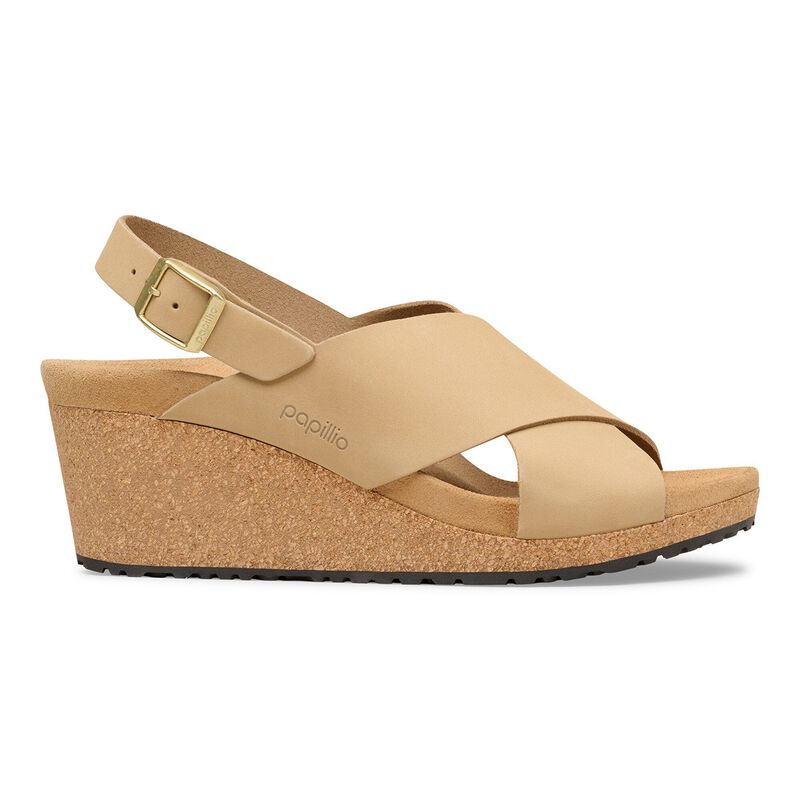
The ankle strap is your stability control. On hard floors, a secure ankle strap keeps the heel seated in the cup. If the ankle strap is too loose, your heel lifts with each step, and the footbed never gets a chance to mold to your heel shape. If it is too tight, you restrict circulation and create pressure points. Aim for a fit that feels secure but allows a slight upward movement of the heel when you rise on your toes. That tiny bit of motion is normal. Locked-down rigidity is not.
Because nubuck leather softens with wear, expect to adjust the straps again after three or four days. What felt snug on Monday may feel loose by Thursday. This is not the sandal stretching out of shape. It is the leather relaxing into its final fit. Keep the buckle holes clean and free of grit, and the straps will hold their adjustment for years.
Walking on Hard Floors: What to Expect
Hard floors are the true test of a footbed. Tile, concrete, hardwood, and stone send impact straight up through the leg. A soft, squishy shoe feels comfortable for an hour and then leaves your arches aching. The cork-latex footbed works differently. It is firm enough to support the arch and disperse pressure, but resilient enough to take the edge off each step. In the first week, you may feel more of the floor than you expect. That is the footbed teaching your foot to land properly.
Start with short sessions. Wear the Samira for thirty minutes on the first day, then an hour on the second. By the end of the week, you can wear them for a full afternoon without thinking about your feet. If you jump straight into an eight-hour day on concrete, you will feel it in your calves and arches. That soreness is not a sign of a bad shoe. It is a sign that your feet are using muscles they have not used in a while. The cork-latex footbed encourages a more natural gait: heel strike, roll through the midfoot, push off with the toes. Most padded shoes let you skip that roll. BIRKENSTOCK does not.
On smooth hard floors, the outsole provides reliable traction. The Samira is not a hiking boot, but it handles daily indoor and outdoor surfaces without slipping. If you are walking on wet tile, take shorter steps and let the footbed do its job. The cork-latex core is sealed, so occasional moisture from a damp floor will not ruin it. Just let the sandals air-dry away from direct heat.
Break-In by the Numbers
Day 1: Wear them for 30 minutes indoors. Notice the arch, the toe bar, and the heel cup. Adjust the instep strap so it is snug but not tight. Adjust the ankle strap so your heel stays seated.
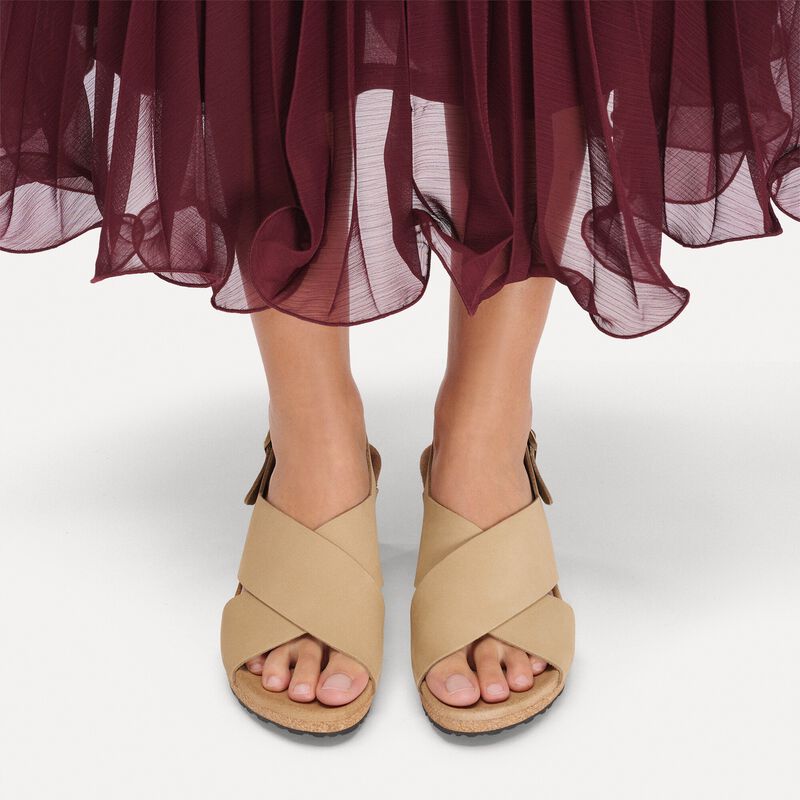
Day 2: Wear them for 1 hour. Walk on a mix of carpet and hard floor. The cork-latex will start to feel warmer and slightly more yielding under the arch. Check the straps again. Nubuck may have relaxed a little.
Day 3: Wear them for 2 hours. This is when most people notice the footbed starting to feel less like a foreign object and more like a base. The toe bar is still there, but your toes are learning to grip it naturally.
Day 4-5: Wear them for 3 to 4 hours. The heel cup should now feel like a cradle rather than a constraint. The arch support should feel present but not aggressive. If you have high arches, this is when the cork-latex begins to fill in the space under your midfoot.
Day 6-7: Wear them for a full day. By now, the footbed has taken a preliminary impression of your foot. The nubuck straps have softened and settled. You can walk on hard floors without the jarring impact you felt on day one. The Samira is not fully broken in yet. That takes a few weeks of regular wear. But the first week is the hardest, and you have passed it.
Nubuck Leather Care in the First Week
Nubuck is durable, but it shows marks. In the first week, avoid wearing the Samira with dark, raw denim or heavily dyed socks. The Sandcastle color is light, and dye transfer is most likely when the leather is new and the pores are open. If you notice a scuff, brush it gently with a soft suede brush. Do not use water or saddle soap. Nubuck responds best to dry brushing and occasional protection spray.
Dark Tea and Pure Sage are more forgiving of everyday marks, but the same rules apply. Keep them away from direct heat, and let them dry naturally if they get damp. The cork-latex footbed does not need to be soaked. A dry footbed is a long-lasting footbed.
Width, Fit, and the BIRKENSTOCK Last
The Samira is built on a BIRKENSTOCK last that follows the natural shape of the foot: wider at the toes, narrower at the heel, with a contoured arch. If you are between sizes, choose the larger size. Your toes should have room to spread without touching the front edge. In the first week, a slightly roomy fit is better than a tight one. The cork-latex will compress a little, and the nubuck will relax. A sandal that feels perfect on day one may feel loose by day seven.
The Samira Nubuck Leather Sandcastle Trail Easy is available in Sandcastle, Dark Tea, and Pure Sage. Each color uses the same nubuck leather upper and the same cork-latex footbed. The break-in process is identical. The only difference is how the color wears. Sandcastle shows the most character, Dark Tea hides scuffs, and Pure Sage stays subtle. Choose the one that fits your routine, then give it a week. Your feet will do the rest.
View this BIRKENSTOCK style in the shop
People also search
are BIRKENSTOCK good for standing cooking at home
BIRKENSTOCK Milano ankle strap vs Arizona stability
BIRKENSTOCK Boston fit compared to Arizona
BIRKENSTOCK Mayari toe loop vs Gizeh fit
BIRKENSTOCK sizing EU to US conversion chart
do BIRKENSTOCK sandals work without socks
BIRKENSTOCK wide width sandals for high volume feet
BIRKENSTOCK arch support sandals for sightseeing
BIRKENSTOCK Arizona taupe vs stone vs black which to buy
BIRKENSTOCK Gizeh thong sandal vs Arizona two strap
BIRKENSTOCK Madrid big buckle trend 2026
BIRKENSTOCK Gizeh regular vs platform
how to clean BIRKENSTOCK Birko-Flor without damage
best BIRKENSTOCK for backyard home and errands
BIRKENSTOCK suede vs nubuck which scuffs less
best color for BIRKENSTOCK Samira Nubuck Leather Sandcastle Trail Easy everyday wear
BIRKENSTOCK kids vs adult sizing for small feet
BIRKENSTOCK Arizona outfit with linen summer clothes
how to store BIRKENSTOCK cork footbed between seasons
BIRKENSTOCK footbed packed out when to replace
BIRKENSTOCK EVA sandals for beach and pool
are BIRKENSTOCK cork footbed sandals good for all-day walking
BIRKENSTOCK footbed sandals for standing on hard floors
BIRKENSTOCK footbed sandals break-in no blisters
best BIRKENSTOCK for airport travel and long flights
BIRKENSTOCK oiled leather clog care rain and commute
BIRKENSTOCK Samira Nubuck Leather Sandcastle Trail Easy vs Arizona for walking
BIRKENSTOCK Arizona regular width vs wide fit guide
BIRKENSTOCK Arizona two strap sandal fit true to size
BIRKENSTOCK Arizona last chance colors worth buying
Trending BIRKENSTOCK searches
BIRKENSTOCK Boston clog
arch support sandals
BIRKENSTOCK unisex sizing
BIRKENSTOCK vegan Birko-Flor
BIRKENSTOCK EVA sandals
BIRKENSTOCK new colors
oiled leather clog care
Samira Nubuck Leather Sandcastle Trail Easy Birko-Flor
ankle strap Milano
BIRKENSTOCK tobacco leather
Boston vs Kyoto
BIRKENSTOCK cobblestone walking
BIRKENSTOCK Milano
Arizona vs Boston
thong sandal Gizeh
BIRKENSTOCK wide width
BIRKENSTOCK soft footbed
BIRKENSTOCK black Arizona
summer BIRKENSTOCK outfits
BIRKENSTOCK white Arizona
