



Function
Ebba Suede Leather Warm Sand City Comfort | BIRKENSTOCK Official
First Week in the Ebba: Cork, Suede, and Your Foot's Own Map
The Ebba Suede Leather in Warm Sand City Comfort arrives stiff, as all good cork-latex footbeds do. That firmness is not a flaw. It is the starting point of a fit that records how you stand, how you walk, and where you put your weight. During the first week, the cork and latex beneath the suede liner begin to yield in millimeters, not inches. You will feel the footbed rise to meet your arch, and the heel cup settle around your heel. By day three or four, the Warm Sand suede upper has softened across the instep. By day seven, the Ebba feels less like a new shoe and more like a cast of your own stride.
This is the BIRKENSTOCK approach: walking as nature intended, with a footbed that supports rather than cushions away the ground. The Ebba is not a pillowy sneaker. It is a city comfort shoe with a cork-latex core, a suede leather upper, and a fit that rewards patience.
What the Cork-Latex Footbed Does in the First Seven Days
Cork is harvested from the bark of the cork oak, then ground and mixed with natural latex. The result is a footbed that is both resilient and moldable. In the first week, the footbed goes through three quiet changes. First, the arch support begins to feel less like a bump and more like a shelf under your midfoot. Second, the toe bar—the ridge just behind your toes—starts to guide your foot into a natural push-off position. Third, the heel cup deepens slightly as your heel presses into the cork, which keeps your ankle centered.
You may notice these changes most on hard floors. Carpet absorbs some of the feedback, but tile, concrete, and wood send a clear message up through the cork. That message is not pain. It is information. The footbed tells you where your weight is landing, and it encourages a heel-to-toe roll instead of a flat slap. If you wear the Ebba for an hour on the first day, two hours on the second, and three on the third, the cork adapts without overwhelming your feet.
The suede leather upper works alongside the footbed. Suede is supple but holds its shape. In Warm Sand, the nap is visible and soft to the touch. The other colorways—Roast, Black/Black, Berry Crush, and Dark Tea—share the same suede character, each with its own depth. Roast is a deep brown with warm undertones. Black/Black is monochrome and sharp. Berry Crush adds a muted red-purple. Dark Tea is a rich, earthy brown. All five sit on the same cork-latex foundation.
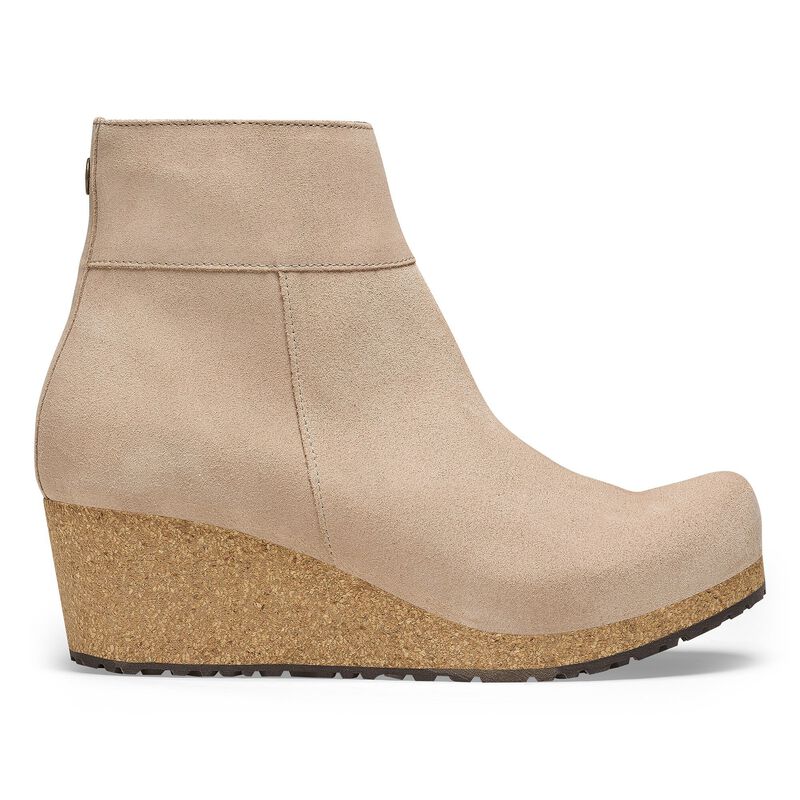
Strap Fit: Adjustable, Not Loose
The Ebba uses suede straps with adjustable buckles. In the first week, the straps will feel slightly stiff at the holes. That is normal. Suede leather takes a few wears to soften at the bend points. Start with the strap over your instep snug enough that you can slide one finger underneath. If the strap is too loose, your foot will slide forward and your toes will press against the front edge. If it is too tight, the suede will press into the top of your foot and the cork footbed will not get a chance to mold correctly.
Check the fit at the end of the day, when feet tend to swell slightly. The Ebba should hold your heel in the heel cup without pinching. The strap across the instep is the main adjustment. The ankle strap, where present, should sit flat against the skin, not dig in. Because the upper is suede, it will stretch a little—perhaps a few millimeters—over the first week. That is why you should not start with the strap on the tightest hole. Begin one hole looser than you think you need. By day five, you can tighten it if necessary.
Width matters here. The Ebba is available in the standard BIRKENSTOCK width, which fits most feet. If you have a wide forefoot or a high instep, the suede will accommodate some volume, but the cork footbed itself does not widen. The footbed is the same orthopedic shape across the Ebba line. If you are between sizes, choose the larger size and tighten the strap. A footbed that is too short will push your toes into the front edge, and no amount of break-in will fix that.
Walking on Hard Floors: What to Expect
City comfort is often tested on hard floors. Concrete sidewalks, tile lobbies, wood hallways, and stone kitchen floors are unforgiving. The Ebba's cork-latex footbed does not bounce like foam. It absorbs impact through compression. In the first week, you may feel more of the floor than you are used to. That is the point. The footbed is teaching your foot to land more evenly, to use the arch, and to push off from the toes rather than the heel alone.
On the first day, keep your walk short—a trip to the mailbox, a loop around the office. On the second day, add a block. On the third day, add two. By the end of the week, you should be able to wear the Ebba for a full workday on hard floors without the footbed feeling foreign. The cork will have started to take on the shape of your heel and the ball of your foot. The suede will have softened across the instep. The straps will have settled into their final position.
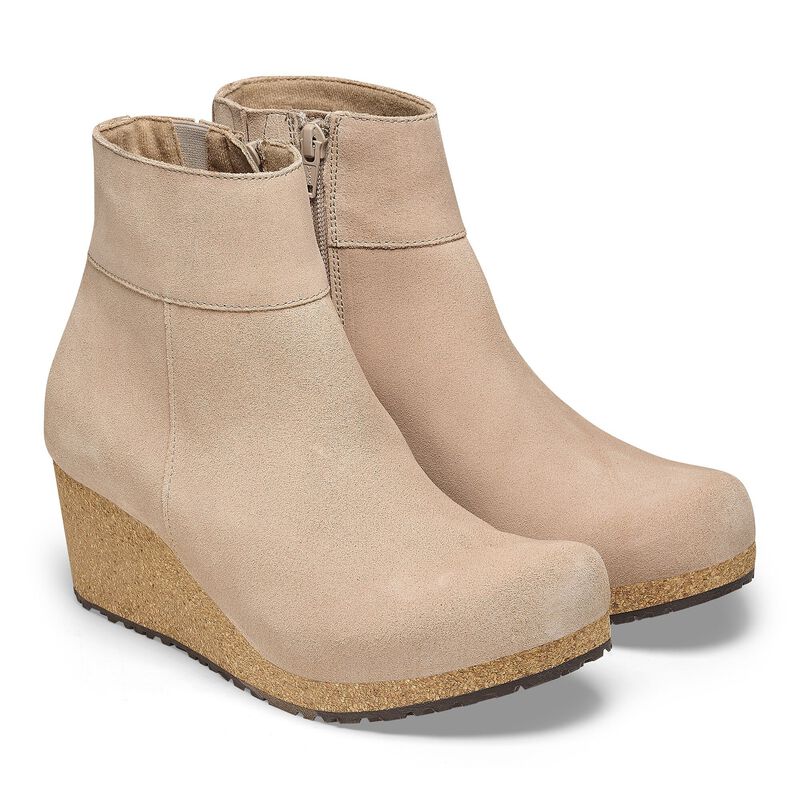
If you stand for long periods, the Ebba's heel cup and arch support become more noticeable. They hold your foot in a neutral position, which reduces fatigue in the calves and lower back. This is not a marketing claim. It is the result of a footbed that was designed by orthopedic specialists and has been refined in Germany for decades. The Ebba carries that heritage in a suede city shoe.
Break-In Is Not a Countdown
Some shoes break in after a set number of hours. The Ebba breaks in according to your gait. A person who walks heel-first will mold the heel cup differently from someone who lands midfoot. A person who stands still for hours will compress the cork under the ball of the foot more than a person who walks constantly. The footbed is reactive. It does not impose a shape. It accepts yours.
That is why the first week should be gradual. Wear the Ebba for short periods. Alternate with other shoes if you feel pressure points. Do not try to force the cork to soften by wearing them wet or by bending them with your hands. Cork-latex is durable, but it is not meant to be abused. Let your own weight and body heat do the work. The latex binder responds to warmth, and the cork granules shift under pressure. This is a slow process, but it is a reliable one.
By the end of the first week, you will notice that the Ebba feels different from the day you took it out of the box. The footbed will have a slight sheen where your heel sits. The suede will have creases across the instep. The straps will have taken on the curve of your foot. These are not signs of wear. They are signs of fit.
Caring for Suede and Cork During the First Week
Suede leather is sensitive to moisture. If you walk on wet hard floors, the Warm Sand suede may darken temporarily. Let it dry naturally, away from direct heat. Do not use a hair dryer or a radiator. A suede brush can restore the nap after the leather dries. The cork footbed itself should not be soaked. If it gets damp, wipe it with a dry cloth and let it air out. The cork-latex will return to its shape, but repeated soaking can weaken the binder.
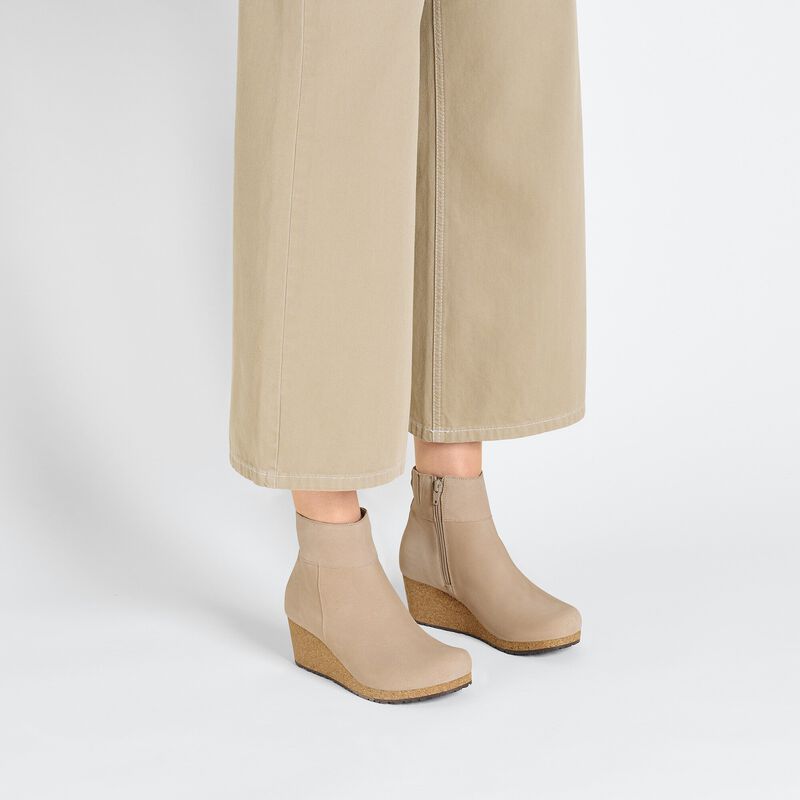
For the first week, avoid wearing the Ebba in heavy rain. Once the footbed has molded to your foot, light moisture is less of a concern, but the suede upper will always need some care. The Warm Sand color shows dust more readily than Black/Black or Dark Tea. A quick brush after each wear keeps it looking sharp. Roast and Berry Crush are more forgiving, but all suede benefits from regular brushing.
The cork footbed does not need polish or conditioner. It needs air. After wearing, let the Ebba sit in a ventilated spot. If your feet perspire, the suede liner on the footbed will absorb some moisture, but the cork underneath will dry. Rotating the Ebba with another pair of shoes gives the footbed time to recover. This is especially important during the first week, when the cork is still adapting.
Why the Ebba Belongs in a City Comfort Rotation
The Ebba Suede Leather is not a gym shoe or a hiking boot. It is a city shoe built on a German orthopedic footbed. It works for commutes, errands, standing shifts, and long walks on pavement. The suede upper gives it a softer look than smooth leather, and the Warm Sand color is neutral enough for most wardrobes. The other options—Roast, Black/Black, Berry Crush, and Dark Tea—cover the rest.
If you are new to BIRKENSTOCK, the first week may feel unusual. The footbed is firmer than a foam insole. The arch support is more pronounced. The heel cup is deeper. But if you give the cork-latex time to respond, the Ebba becomes a shoe that supports your foot instead of just covering it. That is the difference between a fashion shoe and a comfort shoe. The Ebba is both, but comfort comes first.
Walking as nature intended does not mean walking on bare ground. It means walking with a footbed that respects the natural shape of the foot. The Ebba does that. The cork-latex footbed, the suede leather upper, and the adjustable straps work together to create a fit that is personal and practical. In the first week, you lay the foundation. After that, the Ebba continues to adapt every time you put it on.
For hard floors, for long days, for city miles—the Ebba Suede Leather in Warm Sand is a quiet, reliable choice. Break it in slowly. Adjust the straps as your foot settles. Let the cork do its work. The result is a shoe that feels less like footwear and more like a second layer of skin.
View this BIRKENSTOCK style in the shop
People also search
BIRKENSTOCK Arizona vegan Birko-Flor vs leather
how long to break in BIRKENSTOCK cork footbed
BIRKENSTOCK Arizona midnight vs black oiled leather
BIRKENSTOCK Arizona vs Super-Birki garden clog
BIRKENSTOCK Arizona for wide feet reddit fit
BIRKENSTOCK Arizona vs Boston which is better for walking
BIRKENSTOCK Arizona mink vs tobacco oiled leather
BIRKENSTOCK arch support sandals for sightseeing
BIRKENSTOCK sandals lightweight hiking light trails
BIRKENSTOCK Arizona white vs black everyday wear
how to stop heel slipping in BIRKENSTOCK Arizona
are BIRKENSTOCK sandals good for cobblestone city streets
are BIRKENSTOCK good for standing cooking at home
BIRKENSTOCK Gizeh regular vs platform
best color for BIRKENSTOCK Ebba Suede Leather Warm Sand City Comfort everyday wear
BIRKENSTOCK Boston clog with socks in cold weather
BIRKENSTOCK Madrid big buckle trend 2026
are BIRKENSTOCK cork footbed sandals good for all-day walking
best BIRKENSTOCK sandals for standing all day at work
BIRKENSTOCK sandals for nurses and long shifts
BIRKENSTOCK EVA sandals for beach and pool
BIRKENSTOCK men women unisex sizing how to choose
BIRKENSTOCK Birko-Flor vs leather which lasts longer
BIRKENSTOCK Boston taupe suede outfit ideas
BIRKENSTOCK wide width sandals for high volume feet
BIRKENSTOCK Arizona taupe vs stone vs black which to buy
BIRKENSTOCK cork latex footbed how long it lasts
BIRKENSTOCK sizing EU to US conversion chart
is BIRKENSTOCK Ebba Suede Leather Warm Sand City Comfort true to size
BIRKENSTOCK footbed packed out when to replace
Trending BIRKENSTOCK searches
BIRKENSTOCK 2026 trends
BIRKENSTOCK travel sandals
BIRKENSTOCK soft footbed
BIRKENSTOCK Ebba Suede Leather Warm Sand City Comfort
thong sandal Gizeh
BIRKENSTOCK wide width
cork footbed care
Boston vs Kyoto
ankle strap Milano
BIRKENSTOCK unisex sizing
BIRKENSTOCK Big Buckle
BIRKENSTOCK vegan Birko-Flor
BIRKENSTOCK cobblestone walking
contoured cork-latex footbed
arch support sandals
BIRKENSTOCK taupe suede
BIRKENSTOCK airport shoes
two strap sandal
BIRKENSTOCK beach EVA
BIRKENSTOCK black Arizona
